In three decades of cleaning roofs across Whidbey Island, we have learned something the shingle companies will not tell you. Most moss on your roof is more cosmetic than structural. The real problem is spotting the handful of times it crosses that line. This post shows you where the line sits. You will know when the green patch is harmless and when it is time to book a roof washing. You will know when a light brushing will do and when it is time to call in a roof washing crew.
Is Moss on Your Roof Actually a Problem?
Here is the honest answer. In most cases, probably not yet. A patch of green on the shaded side is usually sitting on top of the shingles rather than digging into them, especially on a roof under ten years old with no other warning signs. The problem starts once the moss roots dig deep enough to lift shingle edges or trap water against the decking underneath. The line between cosmetic and costly is what this post helps you see.
Most of the time, you have time.
Moss vs Algae: What Is Actually Growing on Your Roof
The two often get lumped together, but they are different organisms doing different things to your shingles. Moss is a true plant. It has little root structures called rhizoids that cling into the gaps between shingles and hold moisture against the surface like a wet sponge. Algae is different. The black streaks running down most Pacific Northwest roofs are a species called Gloeocapsa magma, which stains the shingle without physically pushing it apart.
The moss vs algae roof question matters because algae is almost always a cosmetic issue. Moss is the one that can become structural.
Why North Puget Sound Roofs Are Especially Prone to Moss
Three local conditions stack together to feed moss on your roof here on Whidbey Island. Rainfall is steady for roughly nine months of the year. Shade windows on north and west slopes stretch long through fall and winter. Tree cover from Doug firs and cedars keeps the air damp around the shingles.
A sunny Oak Harbor roof with no overhanging trees may go five or six years before anything shows up. A shaded Clinton roof under cedar canopy can show thick green mats within two. Cedar shakes near Freeland often carry inch-thick moss that has been growing since the roof went on.
The Warning Signs That Mean It Is Time to Worry
A thin green film is not an emergency. These are the signs that moss has stopped being cosmetic.
- Lifted or curling shingle edges where moss has rooted and pushed the shingle up off the deck
- Granule loss showing up as black grit in your gutters or bare patches on the shingle surface
- Water pooling on the slope instead of shedding cleanly to the gutter
- Visible sagging between rafters, usually meaning moisture has worked into the decking below
- Moss thicker than a quarter inch that has been in place for more than one wet season
Any one of these signals the moss has crossed the line.
Why DIY Roof Moss Removal Can Backfire
DIY methods come up over and over. Each has a real downside.
Scraping feels productive and clears the top layer fast. The trouble is that a stiff brush or scraper drags across the shingle granules on the way through. Those granules are the roof’s UV protection. Losing them shortens shingle life.
Bleach-and-water mixes will kill moss. They can also kill plants under your downspouts and leave bleach runoff on gutters and siding. Mixing ratios vary widely, so results are hit or miss.
Pressure washing is the worst of the three. A 3,000 PSI blast strips granules clean off asphalt in a single pass and forces water up under the shingles. Most shingle manufacturers list high pressure as warranty-voiding, so one bad afternoon with a rental washer can cost the warranty on your whole roof.
The honest answer on roof moss removal is simple. For anything heavier than a light patch, a trained crew with the right equipment is the safer path.
Get a Free Roof Washing Quote
Think your roof has crossed the line? Call A Clean Streak at 360-395-5748 or request a free quote on our roof washing services today.
Why Soft Wash Roof Cleaning Is the Safer Way to Remove Moss
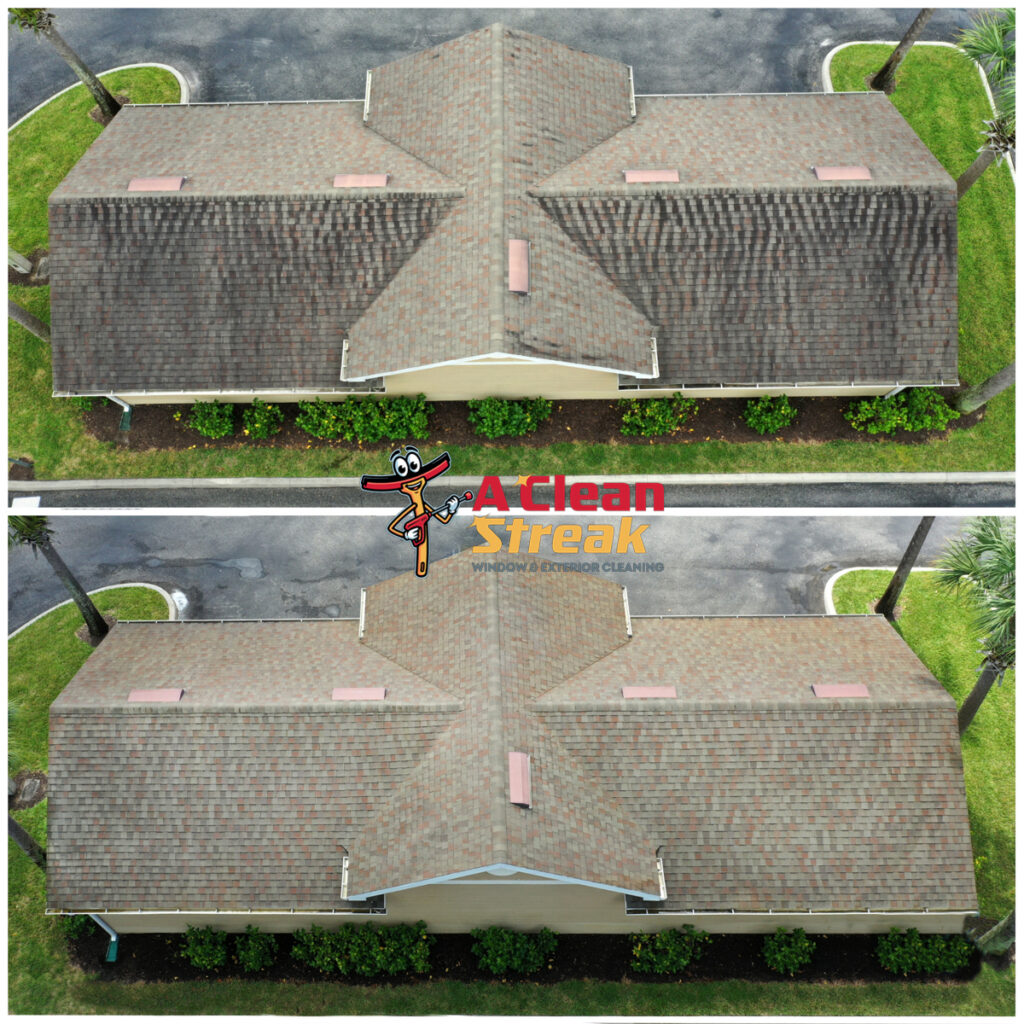
Soft wash roof cleaning handles the job without putting your shingles at risk from scraping or high pressure. Our approach uses a biodegradable solution worked in at low pressure. The cleaning agent does the lifting while the water rinses it off. The solution kills moss down to the rhizoids rather than knocking off the top growth and leaving the roots to regrow in a season.
Soft washing also protects your shingle warranty. Most asphalt shingle manufacturers approve this method in writing, which matters if a repair claim comes up later.
One honest note. On a roof near the end of its service life, soft washing improves the look without adding years back to shingles already losing granules on their own. A newer roof gets more time out of each wash. An older one mostly just looks better.
Preventing Moss From Coming Back
A clean roof is not the finish line. A few habits keep moss from coming back fast.
Overhanging branches should get trimmed, since more sun means a drier roof between storms. Clean gutters matter too, so water sheds off the roof instead of pooling at the edge. For heavily shaded roofs, a periodic soft wash every two to three years stays ahead of regrowth before it becomes visible. On a sunny roof with no tree cover, you may stretch it to four or five years between washes.
Zinc or copper strips near the ridge are worth knowing about. Rainwater picks up trace metals as it runs down the slope, and those metals suppress moss growth over time. The strips will not solve the problem alone. On high-risk roofs, they still help enough to earn the install.
Frequently Asked Questions About Roof Moss
Does moss on a roof always mean damage?
No. A light coat on the shaded side is usually cosmetic, especially on a newer roof. Here is when moss does damage to your roof rather than just sitting on top. Shingles start lifting at the edges, black grit shows up in the gutters, or a moss patch grows thicker than a quarter inch.
Is it safe to remove roof moss myself?
If you are wondering how to remove moss from roof surfaces yourself, light brushing with a soft bristle from a stable ladder is low risk on a single-story roof. Scraping, bleaching, or pressure washing all carry real risk of shingle damage. For a two-story roof or heavy moss, a trained crew with the right fall protection is the safer call.
How often should a roof be soft washed to prevent moss?
The right schedule depends on exposure. A shaded roof under tree cover usually needs attention every two years. A roof with full sun and no overhanging branches can stretch to four or five years, sometimes longer.
Will pressure washing damage my roof?
Yes. High pressure strips granules clean off asphalt shingles and forces water up under the roofing material. It also voids most shingle manufacturer warranties. On a tile roof, it can crack the tiles. Soft washing is the method most shingle makers back in writing.
Can moss shorten the lifespan of my roof?
Yes, if it is left long enough to lift shingles or hold moisture against the decking. A roof rated for 25 to 30 years can lose five to ten of those years to moss damage. Catching it before the warning signs appear is where regular soft washing pays off.
Schedule Your Free Roof Washing Estimate
Have more questions about moss on your roof? Call A Clean Streak at 360-395-5748 or request your free quote today.